Goal Action Planner for KDP: Making Smart Choices for Your Next No-Content Book
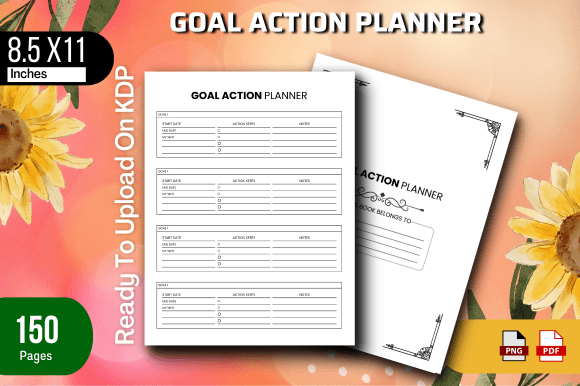
You have probably seen the rise of low-content books on Amazon. Journals, sketchbooks, and especially planners dominate search results. The Goal Action Planner for KDP enters the scene as a specifically designed interior file, ready to upload, which promises to shorten the time between idea and income. For many, this concept is incredibly appealing. Self-publishers, small business owners, coaches, and even hobbyists are looking to create a high-quality product without spending weeks wrestling with design software. A package that includes a tested 8.5 x 11 inch PDF, a 150-page layout, and a supporting PNG image sounds like a very tidy solution.
However, the convenience of a ready-made file can also open the door to avoidable mistakes. I have seen countless swift purchases lead to frustration because a few key details were overlooked. This is not about warning you away from such resources. It is about helping you use them in a way that protects your time, your brand reputation, and your Amazon KDP account standing. The difference between a smooth launch and a messy one often comes down to the questions you ask before hitting that upload button.
Why a Tested Interior Changes the Game
The core value of Goal Action Planner for KDP lies in its promised readiness. The seller explicitly states that files were tested on Amazon KDP to ensure quality. This is a critical point that many first-time buyers gloss over. An untested PDF can be rejected during the review process for margins, bleed settings, or font embedding issues that are invisible to the naked eye. By using an interior that has already passed the automated and manual checks, you are saving yourself from the silent stress of repeated "revision required" emails.
What many don't realize is that "tested" does not mean you skip your own validation step. Technology updates, KDP's print-ready specifications can tighten seasonally, and what passed six months ago might trigger a warning today. Always, without exception, use the KDP Print Previewer after uploading. Do not just glance at the first page. Click through random pages, inspect the edges for cut-off text, and verify that the grey tones in any decorative elements render cleanly. A physical proof copy is never a wasted expense if your brand depends on customer reviews. Never trust that a past test guarantees a current result.
Overlooking the 8.5 x 11 Inch Dimension and Spine Calculation
One of the most overlooked aspects of a fixed-size interior is how it actually converts to a physical product. A planner delivered at 8.5 x 11 inches is designed as a standard large-format US letter size. This is a wise choice for a goal-setting tool because it gives users plenty of writing space. Still, a common mistake occurs when creators assume that the same page count works seamlessly for both paperback and hardcover formats, or that they can simply swap the interior into a smaller trim size without consequences.
When you upload a 150-page interior, the final book's spine width is calculated based on the paper color and type you select. White paper, cream paper, and premium color paper all have different thicknesses. If you download a cover template from KDP for an 8.5 x 11 inch book with a 150-page count, but later decide to change the paper stock, your spine will shift. Suddenly, your barcode or title might wrap around the edge incorrectly. Before you even download a cover template, finalize your paper choice and stick to it. Your physical goal-setting planner needs to look precise and professional on a shelf.
The 150-Page Layout: Balancing Depth and Runaway Cost
A 150-page planner hits a sweet spot. It is substantial enough to feel like a comprehensive system but not so thick that it becomes heavy or intimidating. However, a pattern I often notice is that purchasers do not study the page layout distribution before publishing. How are those 150 pages used? Are there 10 pages of annual goal breakdowns, 120 weekly spreads, and 20 dotted note pages? Or is the document filled with repetitive, undated identical sheets? Both can work, but only one suits a specific audience’s intent.
If you are marketing this as a deep action-oriented tool, your product description on Amazon must match the interior's structure. A mismatch here leads to returns and negative reviews. If the interior is heavily weighted toward daily tiny-task checklists but you promise "strategic annual planning," the customer might feel misled. Additionally, printing cost is tied to page count. A 150-page black-and-white interior has a set production price. You need to model your royalty calculation accurately, factoring in Amazon’s printing deduction. Pricing a 150-page book as if it were a 100-page book is a small error that can slowly drain your profit margin without you immediately noticing.
Why the Included PNG Image Is Often Wasted
The inclusion of a PNG image within the Goal Action Planner for KDP bundle is a thoughtful addition, yet it is frequently the most underestimated component of the package. Many purchasers assume this is simply a clipart piece to stick inside the book. In reality, this transparent-background image is a powerful marketing asset that can bridge the gap between a flat listing and a compelling brand preview.
The oversight usually happens when someone builds their Amazon product page using only the generic "Look Inside" feature. A transparent PNG can be perfectly layered over lifestyle mockup scenes without jagged edges. You can showcase the interior on a desk scene, next to a coffee cup, or on a tablet, enhancing your A+ Content and product images. Using this available graphic to its full potential gives you a branded, cohesive look that can signal higher quality to casual browsers. When team members or freelancers help with your marketing, pass them this exact file instead of a low-resolution screenshot. It keeps your visual marketing sharp and consistent, which directly impacts perceived value.
The Mistake of Treating Every Ready-to-Upload File as Unique
Amazon KDP may flag content for a poor customer experience if an interior lacks meaningful differentiation. The term "Goal Action Planner" is descriptive, and the marketplace sees many similar titles. A risky shortcut is to download the file, write a quick cover title, and publish without adding any truly distinguishing features. This can lead to claims that the content is already available more cheaply or even an account-level review that questions the originality of the work.
This does not mean the ready-to-upload interior is a problem. It means you are supposed to build upon it. You can add a personalized introductory letter from you as the creator, a unique QR code linking to a bonus video on goal setting, or a custom copyright page with your branding. The internal pages can remain largely intact, but a few tweaks that reflect your voice can substantively shift the product from "template dump" to "curated system." Before publishing, ask yourself if a buyer who owns a similar undated journal would still find a legitimate reason to choose yours.
How a Scattergun Approach Damages Your Brand
Another subtle trap is the temptation to publish the same interior under multiple pennames or in different categories with only the cover altered. If your target audience is entrepreneurs, keep the interior focused on terms that resonate with them, perhaps editing a few prompt phrases to include business vocabulary. If you want to pivot to an audience of health and fitness coaches, reworking some of the action words and guided prompts from "quarterly revenue goals" to "quarterly wellness milestones" is basic. Simply changing the cover without touching the interior text is a form of re-use that can weaken customer trust if someone buys both versions.
A helpful practice is to review a copy of the planner as if you are a skeptical user. Read through the goal-setting prompts. Write down everywhere a phrase feels jarring or generic. Then, adjust those small moments. Your name on the product listing carries the responsibility of quality. Even a small, thoughtful paragraph at the beginning of the book can humanize the product and drastically reduce bounce rates on the sales page.
What You Should Recheck Before Publication Day
Given how easy it is to get caught up in the excitement of a new KDP launch, a few pragmatic steps can safeguard your project. These recommendations apply to any ready-to-upload planner interior you acquire, including this one.
- Hyperlink sanity check. If the interior PDF contains any clickable links for a print-on-demand book, they need to be removed or verified as harmless. While many PDF interiors are clean, checking hyperlinks prevents strange formatting issues during the review phase.
- Margin comfort on interior pages. Physically print a handful of the most complex pages at 100% scale on your home printer. Bind or clip them together and try to write on them with a regular pen. If the gutter margin is too tight for comfortable writing, that will surface in reviews.
- Cover file alignment. Your cover must be separately designed. Use KDP's cover calculator for an 8.5 x 11 inch paperback at the exact 150-page count. Do not assume that a pre-set template found online will match your chosen paper color.
- Copyright and font clarity. Even if the files were tested, verify that any decorative fonts used in the interior have embedding rights that allow for print replication. A quick check with the original seller or a quick font analysis tool can avoid an unexpected suspension.
Ensuring Long-Term Customer Happiness with Your Planner
Your customers buy a Goal Action Planner for KDP-sourced tool because they want a tangible system that helps them feel organized. The physical quality of the book they receive is held to the same standard as any big publisher's planner. If the paper feels too thin with bleed-through from a sharpie, that is a product quality issue. The press you choose (standard color, premium, etc.) affects that feel. For a 150-page planner intended for heavy writing, I strongly suggest ordering a proof copy before making a final decision on paper type, perhaps even opting for the slightly thicker stock if the budget allows. Sticker-flake rejections or internal page warp from high-adhesion pens are things that your target users will mention immediately.
Furthermore, you must provide clear assembly instructions or completion guidelines in your listing's description. Since this is not a bound book of narrative, undated planners often come with the implied promise of lasting forever-ish. Be clear and direct: "150 pages including annual, quarterly, monthly, and weekly layouts; undated for flexible starting points." Information like that prevents the "product didn't match description" claim. The listing itself becomes your primary communication tool for setting accurate expectations.
Viewing This Asset as a Foundation, Not a Finish Line
It can be helpful to reframe the purchase of a ready-to-upload interior. Rather than seeing it as the finished product, treat it as a sensible framework that removes the drudgery of bleed setting, margin calculation, and master-page duplication. Your contribution lies in how you contextualize the goal-setting experience. Some creators record a short video walkthrough of the planner and link it in the back matter, giving digital value to a physical purchase. Others create a companion spreadsheet. These small bridges make your product memorable and harder to overlook in a crowded category.
Commercially, a planner that is paired with engaged marketing often outperforms a planner that is purely a passive upload. The PNG image that comes in your bundle should be central to social media posts, pinned images, and email campaigns. Uniform visual branding builds the kind of recognition that causes repeat purchases across your catalog. Make sure your audience can instantly recognize your content style across any backdrop.
When the practical elements are handled carefully, your experience with the Goal Action Planner for KDP becomes less about managing technical glitches and more about building a small product line that actually helps people act on their intentions. The planner's value multiplies when you commit to a responsible launch sequence that prioritizes preview screens, physical proof copies, and honest category selection over a rushed push for a quick upload.