Why Walking Tracker KDP Interiors Simplify Low-Content Publishing
Creating a journal, notebook, or planner that sells on Amazon requires more than a good idea. The interior layout shapes how the user experiences every page. A Walking Tracker Kdp Interior takes guesswork out of the process by providing a fully designed, print-ready template that fits the KDP print-on-demand ecosystem perfectly. Instead of wrestling with margins, bleeds, or inconsistent typography, you get a ready-to-upload file built around a popular niche—fitness and step tracking. For designers, marketers, and small business owners diving into low-content publishing, this kind of interior acts like a silent partner. It blends function with a clean look, so the final product feels professional from the first log to the last.
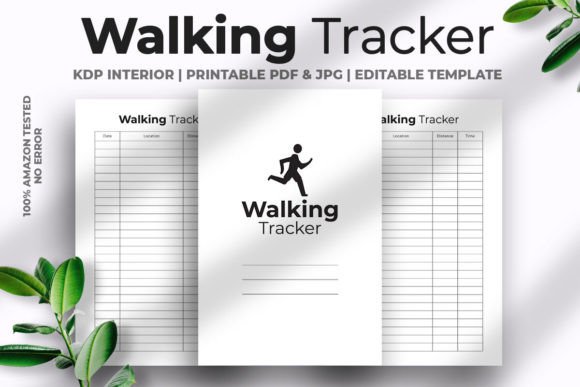
The visual personality of this interior lands somewhere between a structured bullet journal and a minimal wellness dashboard. Layouts are crisp, intentional, and free of clutter. Tables, checkboxes, and progress bars sit within generous white space, making entries feel less like a chore. Because the Walking Tracker Kdp Interior uses vector-based elements, every line and shape scales without losing clarity—crucial when you’re adapting one design across multiple trim sizes or spin-off products. The overall appeal is versatility: it can lean into motivational fitness branding or stay understated for a premium quiet luxury journal, all by swapping a few color swatches or the accent typography.
How a Purpose-Built Interior Shapes Customer Trust
Low-content books live and die by perception. When a buyer flips through the Look Inside feature on Amazon, they form an instant opinion based on page layout, spacing, and typeface consistency. A Walking Tracker Kdp Interior that arrives with a coherent grid system and ample writing room signals quality. This isn’t just about looks—readability and logical hierarchy determine whether someone actually uses the tracker or abandons it after three days. By using a modern sans-serif base for headings and practical numerals for daily step counts, the interior creates a subtle rhythm. The user’s eye naturally moves from date to goal to actual steps without friction.
Brand perception gets a lift too. Even if you’re publishing under a fresh KDP imprint, the interior’s polish can make your book sit comfortably alongside mass-market planners. Consistency across all 120 pages matters. No shifting baselines, no pixelated icons, no awkward blank pages that feel like a mistake. The Walking Tracker Kdp Interior is designed with this in mind—every page follows the same visual logic, so the tracker feels cohesive whether someone opens it on day one or day sixty. Such reliability turns one-time buyers into repeat customers who trust your product line.
Where This Interior Design Shines Across Niches
A walking tracker interior isn’t limited to pure fitness books. The clean structure adapts beautifully to a range of publishing projects. A few examples from my own workflow and client launches show how flexible it can be:
- Daily accountability journals – pair the step tracking pages with prompts for hydration, gratitude, or meal logging. The neutral design keeps focus on content without visual fatigue.
- Senior wellness notebooks – larger checkboxes and slightly heavier font weights (easily edited in the vector file) improve readability for an older demographic.
- Giftable holiday editions – add seasonal illustrated headers while keeping the core tracking grid unchanged. The editable PDF handle seasonal variants effortlessly.
- Branded corporate swag – companies use custom walking challenge books for employee wellness. Because the interior is 100% vector, a logo and brand palette can be applied without resolution loss.
- Physical therapy companion books – combine step count with custom pain or mobility scales alongside the tracker, turning it into a niche health tool.
Print-on-demand sellers outside KDP also benefit. The no-bleed setup and standard 6 x 9 inch trim make it compatible with IngramSpark, Lulu, or even small-run local printers. I’ve seen crafters combine this interior with handmade covers for local markets, blurring the line between mass publishing and artisanal goods. The Walking Tracker Kdp Interior serves as a canvas—the underlying architecture is solid, so you focus on audience-specific tweaks rather than foundational layout work.
Typography That Works Hard Without Shouting
Open the editable PDF in Adobe Illustrator, and you’ll notice the typeface decisions are intentional but not precious. The primary text often uses a humanist sans-serif—think something near Open Sans or Montserrat—that keeps a friendly, approachable tone without feeling childish. Numerals stay aligned in tabular figures so columns of step data line up perfectly, a tiny detail that subconsciously reads “organized” to the buyer. This is where understanding typeface as a design asset pays off. A Walking Tracker Kdp Interior built on well-chosen modern typography principles respects the content while projecting a quiet authority.
If you decide to swap fonts in Illustrator, test a few font pairing strategies before committing. A clean display font for the title page can add personality, but keep the body tracking sections in a reliable workhorse typeface. I’ll often experiment with a light script font for motivational pull-quotes, then contrast it with a sturdy sans serif for the actual logging space. The vector file supports this experimentation effortlessly. Just ensure any custom font you embed is licensed for print-on-demand commercial use—otherwise you risk Amazon’s Content Review flagging the file.
Readability, Hierarchy, and the No-Bleed Advantage
The absence of bleed might sound like a technical footnote, but it shapes the entire user experience. When a KDP book prints with bleed, artwork extends to the edge, and the trim can shift slightly, sometimes cutting off important tracking tables. A no-bleed interior guarantees that every checkbox, every daily grid sits securely within the safe zone. For a Walking Tracker Kdp Interior, that means users won’t lose half a column of their step records due to manufacturing variance. Combine this with a clear visual hierarchy—bold section headers, lighter secondary text for instructions, and ample line spacing—and you have an interior that’s genuinely functional, not just decorative.
Readability is also about the paper texture implied by the design. While we can’t control KDP’s stock, we can control how “heavy” the page feels visually. Overly dense tables or tiny fonts create a cramped look that screams “I ran out of time.” This interior uses breathing room strategically. Trackers feel airy, almost like a curated wellness app in physical form. That sensation builds perceived value far beyond the page count.
Making It Your Own Without Breaking the Layout
One of the strongest selling points I share with other designers is that the Walking Tracker Kdp Interior is 100% vector editable, not just a static PDF. In Illustrator, you can click into any text block and adjust the wording, swap “steps” for “miles” or “kilometers,” or add a secondary metric like calories or active minutes. This kind of granular control means you can spin one master file into multiple variations—a light tracker for casual walkers and an advanced version for marathon trainers—while keeping the foundational layout intact. You’re essentially building a product line off a single proven template.
When customizing, keep these practical points in mind:
- Global edits save time. Use character styles or the select same feature to update all headers in one click. Consistency in font size and weight across 120 pages is non-negotiable for a commercial product.
- Color palette shifts should respect print limitations. Stick to CMYK values that don’t drop below 5% ink coverage for light tints, or they might vanish on certain printers. The original high-resolution design is tested on KDP, so its palette already exists within safe production limits.
- Watch the spine creep. 120 pages in a 6x9 format have a spine thickness; inner margins might need a slight increase if you add more pages. The included no-bleed file assumes 120 pages, so preserve that margin ratio if you extend the book.
- Test on a physical proof copy. Even a 100% tested Walking Tracker Kdp Interior can look different on KDP’s cream versus white paper. Order one author copy before publishing the final listing to confirm contrast and ink weight.
Commercial Licensing and Long-Term Brand Use
Many creatives overlook licensing when they purchase design assets. This interior comes from a collective with over a decade in high-end branding and product development, so the terms are built for commercial KDP use. That means you can produce and sell printed copies, create derivative designs, and earn royalties without additional fees. It’s a commercial font-friendly asset in spirit—the vector letterforms and design elements don’t carry hidden usage restrictions that would block a print run. For anyone building a serious low-content brand, clarity on licensing removes a major point of friction.
I’ve seen entrepreneurs spin a single Walking Tracker Kdp Interior into a full brand identity. They’ll design matching covers using the same typographic system, launch a companion recipe journal with complementary design language, then package a gratitude log with identical grid logic. This unified product suite builds recognition. Customers start to associate that clean tracking style with your imprint, and you gain an edge in a crowded niche. The interior’s vector format acts as the foundation, and your creative direction does the rest.
Why File Quality Matters More Than Most Publishers Realize
Amazon KDP can be finicky about file formatting. Low-resolution JPEGs or PDFs with embedded font errors trigger review failures that delay a launch by days. The Walking Tracker Kdp Interior package includes a high-resolution 300 DPI JPG folder alongside the AI-supported PDF, so you can cross-check elements or use the JPGs in Kindle Create if you’re building an eBook variant. The raw quality—100% original design, fully tested—means you skip the tedious preflight stage and move straight to uploading. For time-strapped marketers and bloggers, that reliability is worth more than the template’s price.
Even small production details like the original vector paths for icons matter. A raster icon might look fine on screen but print with soft edges on KDP’s digital press. Vector artwork stays pin-sharp. This is especially noticeable in the small trackers: footprint icons, star ratings for daily performance, or tiny motivational badges. The Walking Tracker Kdp Interior keeps those details crisp so the book feels professionally manufactured, not like a rushed home-printed project. That tangible difference translates directly into better reviews and lower return rates.
Integrating the Tracker Into a Larger Content Strategy
A walking tracker doesn’t exist in a vacuum. If you run a blog, YouTube channel, or social media presence around fitness or productivity, this interior becomes a physical extension of your digital content. You might create a 30-day walking challenge, direct followers to your KDP book for the printable log, and post daily check-in graphics that mirror the tracker’s layout. The Walking Tracker Kdp Interior then serves double duty: a revenue-generating product and a community-building tool. The design’s consistency across platforms reinforces your brand identity in a subtle but compelling way.
For those exploring low-content publishing as a passive income stream, starting with a tested interior like this shortens the learning curve dramatically. Instead of deciphering KDP’s trim size requirements, margin minimums, and font embedding rules from scratch, you study a working example. Open the file in Illustrator, observe how layers are organized, notice the margin distances, and learn by reverse-engineering a professional setup. That hands-on insight stays with you well beyond this single product.
The practical reality is that templates don’t stifle creativity—they free up mental bandwidth to focus on marketing, audience research, and cover design. When your foundation is a Walking Tracker Kdp Interior that’s already 100% tested and print-ready, you can afford to experiment with different cover art styles, launch sequential journals, or test niche keywords without the usual production anxiety.